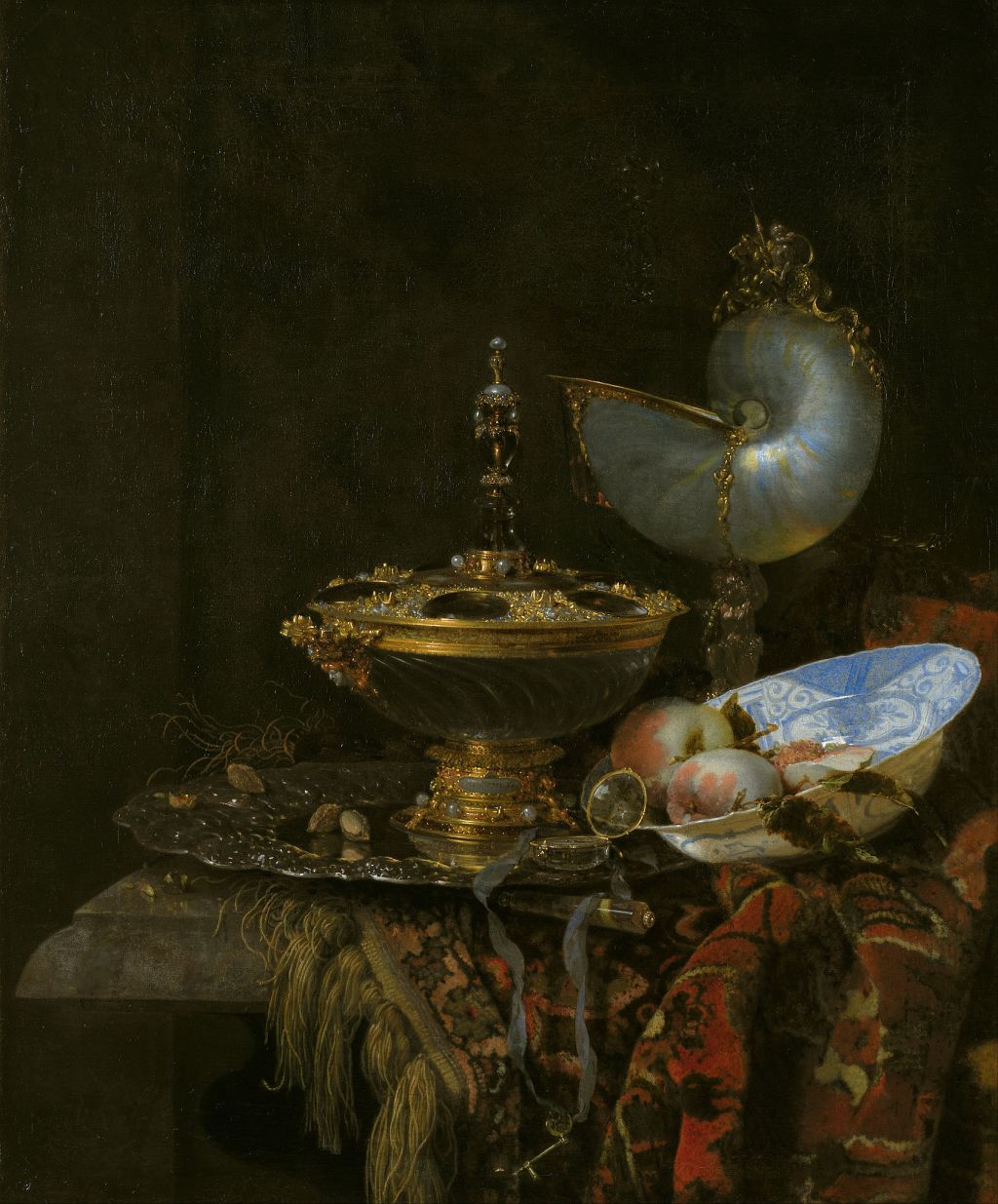
with Holbein Bowl, Nautilus Cup, Glass Goblet and Fruit Dish
WILLEM KALF, 1678
Born 1619, Willem Kalf was one of the most esteemed still-life painters of the Dutch Golden Age. Famous for developing a style known as Pronkstilleven, which translates to ‘ornate’ or ‘flamboyant’ still-life, he made significant contributions to the genre, moving it past its more pared-back roots.
While most Pronkstillevens feature grand compositions, Kalf chooses to focus on only a few objects here, though they are unmistakably ‘ornate’ in style with intricate detail and dazzlingly rendered surfaces. The gleam of a Nautilus Cup emerges from the darkness and a porcelain dish topples over, spilling apricots beside the intricate ‘Holbein Bowl’ from which the painting takes its name, a piece designed by the artist Hans Holbein for Henry VIII of England.
It was considered a status symbol to own a still-life in the Pronkstilleven style as not only did the painting hold value as an art object, but it also depicted luxury goods which could indicate the wealth and refinement of the household in which it was displayed.
Though some recent scholarship has claimed that the pocket-watch Kalf includes in this still-life means the painting should be categorised as vanitas – interpreting it as a symbol warning against the ephemeral nature of all things – contemporary sources attest that his greatest aim was always to impress viewers with visions of grandeur and abundance, moral messages coming second to his penchant for Pronk.
 Art History Explained
Leave a comment