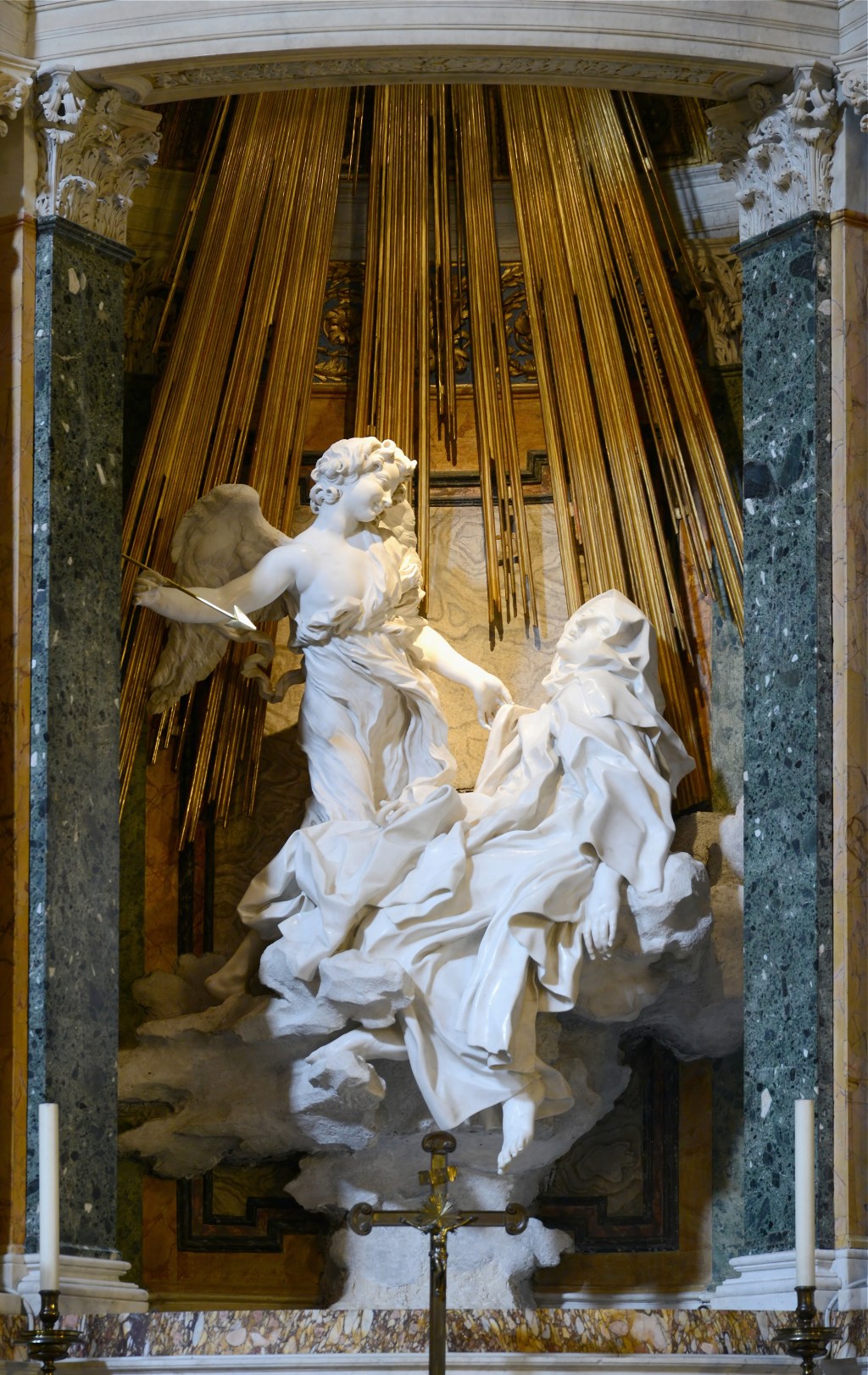
GIAN LORENZO BERNINI, 1652
Bernini’s “Ecstasy of Saint Teresa” is a marble sculpture depicting the religious ecstasy of Saint Teresa of Ávila, and is currently located in the Santa Maria della Vittoria (Rome). Standing at roughly 3.5 metres tall, this life-sized statue is coined as one of the great sculptural masterpieces of the Baroque.
The piece was commissioned by Cardinal Federico Cornaro in 1647, to feature in his burial chapel. Priced at 12,000 scudi, the statue was particularly expensive – even for the time. Bernini completed the work in 1652, a year before Cornaro’s death, his “Ecstasy of Saint Teresa” replacing the chapel’s existing sculpture of Saint Paul in Ecstasy.
Saint Teresa, the subject of this statue, was the first Discalced Carmelite saint. Canonised in 1622, she was believed to have experienced heavenly visions and raptures, an instance of such inspiring this piece. Her description of the event is as follows:
“I saw in his hand a long spear of gold, and at the iron’s point there seemed to be a little fire. He appeared to me to be thrusting it at times into my heart, and to pierce my very entrails; when he drew it out, he seemed to draw them out also, and to leave me all on fire with a great love of God. The pain was so great, that it made me moan; and yet so surpassing was the sweetness of this excessive pain, that I could not wish to be rid of it. The soul is satisfied now with nothing less than God.”
Bernini immortalises this moment through sculpture. The scene is illuminated from above by natural light, giving the impression of a heavenly glow shining down upon the figures. Saint Teresa reclines upon a cloud, indicating that this event taking place is not the actual experience recorded by her, but instead a divine apparition: witnessed both by us as viewers, and by high-relief donor portraits of the male members of the Cornaro family who appear to observe the scene from viewing boxes.
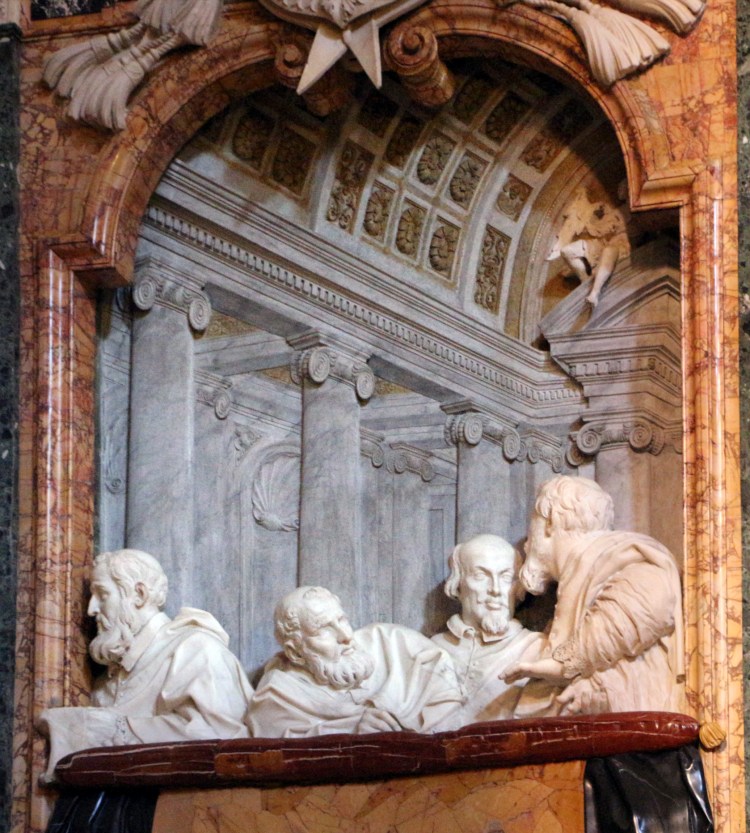
The innate theatricality of this statue is characteristic of Baroque art, and adds to the grandeur and impact of the piece. The drama of the moment immediately catches the viewers attention, and instils a sense of awe, mirrored in the Cornaro portraits. Involving its viewers within the scene as an extension of these sculpted onlookers; all becoming lumped together as spectators to divinity.
Infamously, the piece merges sensual and spiritual pleasure to convey this image of religious ecstasy. Many interpreting the piece as a depiction of female sexuality, suggested in her swooning, open-mouthed posture. This idea is echoed in Saint Teresa’s writing: the tactile, euphoric language relying on intense physical imagery to communicate her holy experience. Both her records, and Bernini’s sculpture utilising theatricality, gesture and implied sensuality to describe the indescribable – aiming to relay this extraordinary moment to the viewer.
Perspective also plays a huge part in the viewer’s experience of this piece. Placed above ground level, the statue is seen from below, obscuring much of St Teresa and drawing focus toward the angel standing over her. His smiling face clear as he looks down at the saint, poised with arrow in hand. All elements of his actions made clear through his open posture, enabling the viewer to regard him from a similar perspective as Saint Teresa herself. This further immerses the audience into the piece, allowing us to take on the role of Saint Teresa, and experience the moment alongside her, encouraging contemplation and meditation of the event.
Overall, Bernini’s “Ecstasy of Saint Teresa” makes full use of drama and dynamism in order to capture this immense moment of religious euphoria. While the piece’s intricacy and realism is typical of Bernini, it is undoubtedly his presentation of emotion here that shines through. The theatrical impact of the piece inspiring awe and wonder in its viewers, bringing us closer to this remarkable event through its immersive nature.
 Art History Explained
Leave a comment