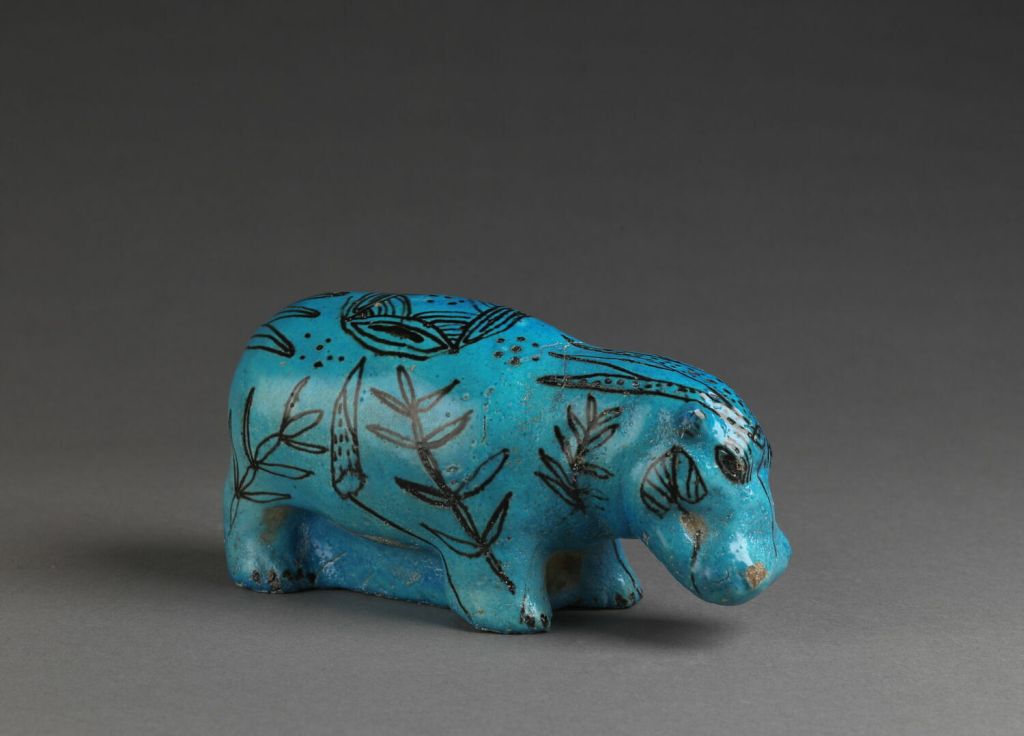
SEVENTEENTH DYNASTY, LATE SECOND INTERMEDIATE PERIOD (1580-1550 BC)
This blue hippopotamus faience figurine stands at roughly 12cm tall, and is currently housed at the Louvre. Created during the Seventeenth Dynasty of Egypt, this figurine would have most likely been held in a tomb alongside funerary objects and works of art.
Much like other existing figurines, this hippopotamus has a multitude of water plants painted on its back, symbolising regeneration and new life. Therefore, placing this figurine within the tomb was thought to enable the deceased to be reborn in the afterlife; the piece taking on a functional purpose rather than simply serving as a decorative object.
The lotus on the figurine’s hindquarters alludes to the Egyptian creation story wherein, after the birth of the world, the sun emerges from the chaos, rising from out of a lotus flower. Further consolidating the piece’s themes of rebirth and the cycle of life. Colour symbolism also plays a prominent role in ancient Egyptian art, with the colour blue symbolising birth, fertility, and the Nile itself. Its connotations of life and rejuvenation lending itself well to the purpose of this figurine.
This particular figurine is unique in that its four legs are joined at the base by a strip of faience, perhaps for structural support due to its large size. However, hippopotami were reputed to be a danger to boats travelling on the river Nile, as well as for those working near its banks. Therefore, due to the belief that the art created for tombs would come alive and accompany the deceased in the afterlife, this join may have been introduced to restrict the hippopotamus’ movement, preventing it from harming the dead. Much like the broken legs of ‘William’ the Hippopotamus statuette (c. 1961–1878 BC) at the MET.
Overall, this hippopotamus figurine not only holds a strong visual appeal in its rich colour and striking design, but also evokes significant symbolic meaning. Taking on a functional role in facilitating the rebirth of the deceased, and accompanying them into the afterlife.
 Art History Explained
Leave a comment