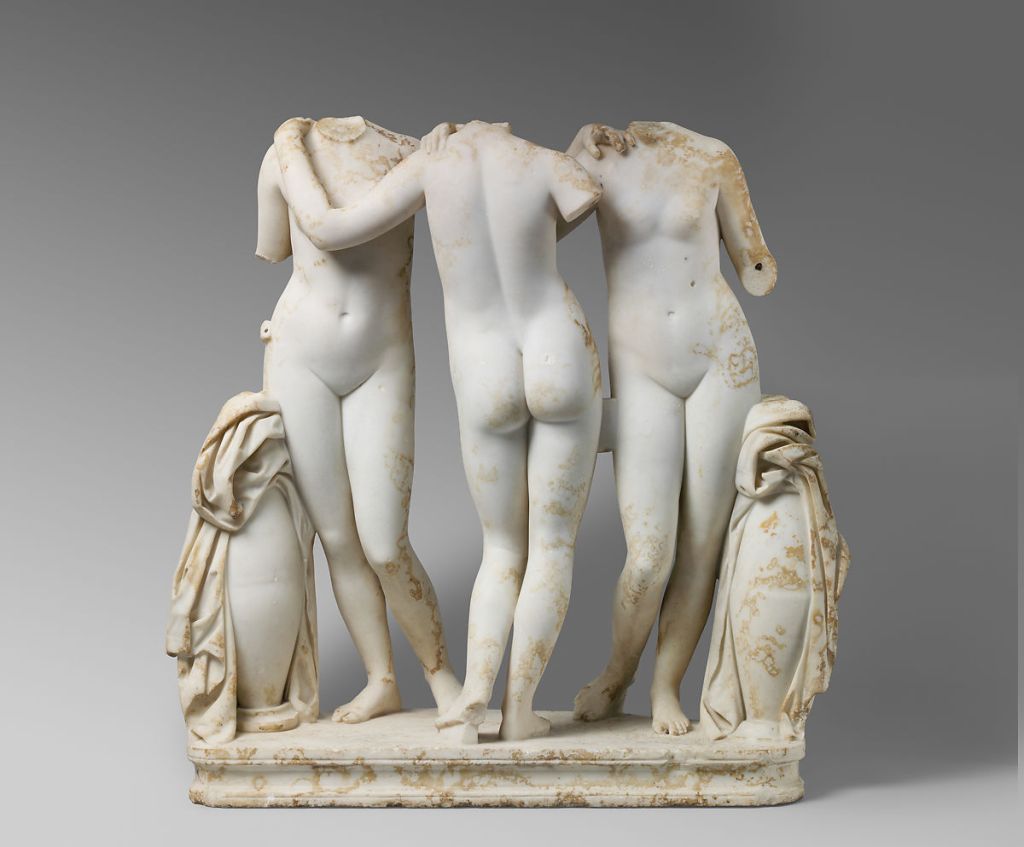
ROMAN COPY, 2nd Century AD
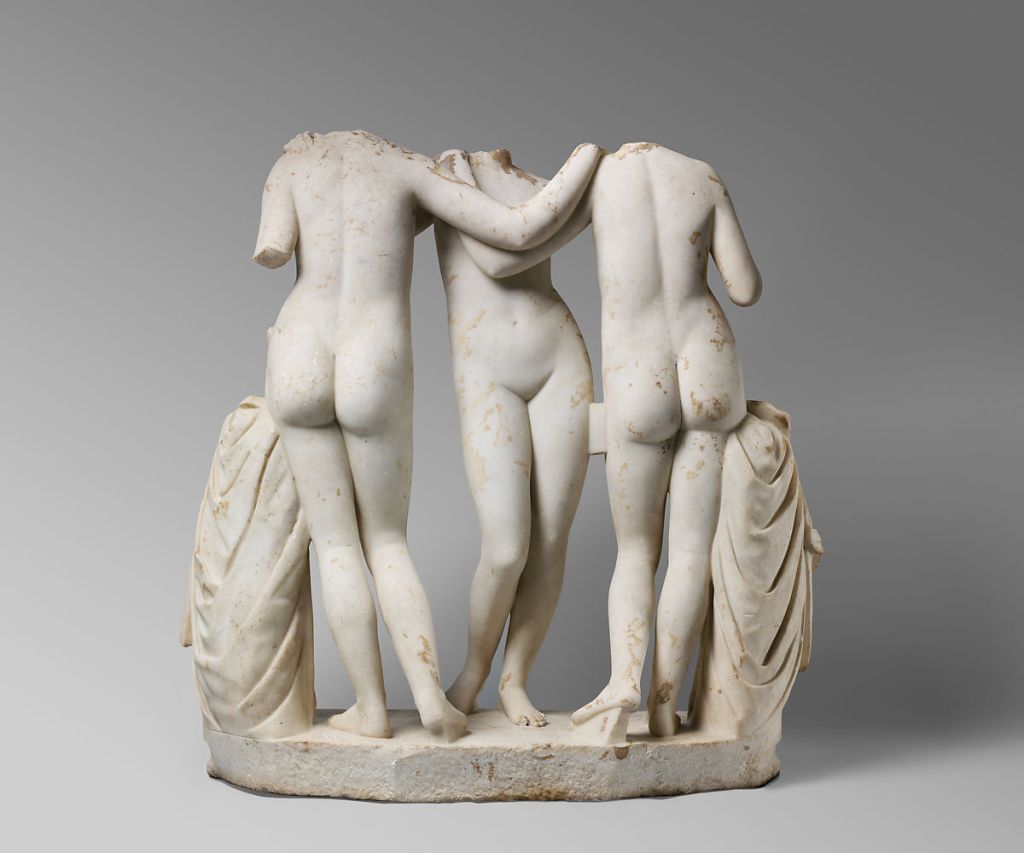
Created in 2nd Century AD, “The Three Graces” is a Roman copy of a 2nd Century BC Greek sculpture. The marble piece stands at approximately 1.2m by 1m tall, currently located in the MET’s Roman Sculpture Court.
The sculpture was likely created for a wealthy Roman patron; expansion and travel creating a high demand in Ancient Rome for work reminiscent of Greek culture. Though, it is uncertain as to whether the piece is a direct copy of an original Greek work, or if it has been altered to better suit Roman ideals.
The figures’ characteristic pose has enabled the piece to be identified as a portrayal of The Three Graces, this archetypal composition popularised during the 1st and 2nd century BC. Deriving from Greek Mythology, The Three Graces are typically seen as attendants to Aphrodite, most frequently named as: Aglaia (Goddess of Beauty), Euphrosyne (Goddess of Mirth), and Thalia (Goddess of Abundance).
This subject has been particularly popular with artists throughout history, famously depicted by the likes of Raphael (1483 – 1520), Bottocelli (c. 1545 – 1510), and Canova (1757 – 1822). Such popularity can most likely be attributed to the potential for visual harmony between the three figures, providing artists with the perfect opportunity to demonstrate their compositional prowess.
Historically, The Three Graces provided many artists’ work with a sense of Classical authority, appealing to many artists looking to boost (or consolidate) the reputability of their art. Though many artists today still return to this topic, challenging ideas of idealism through their subversion of this iconic arrangement.
Overall, “The Three Graces” highlights the strong influence of Greek sculpture not only on the art of Imperial Rome, but in the development of art as we know it today. The subject of The Three Graces shifting and changing to reflect the political and social climates of the artists depicting them.
 Art History Explained
Leave a comment