SIR FRANK DICKSEE, 1900
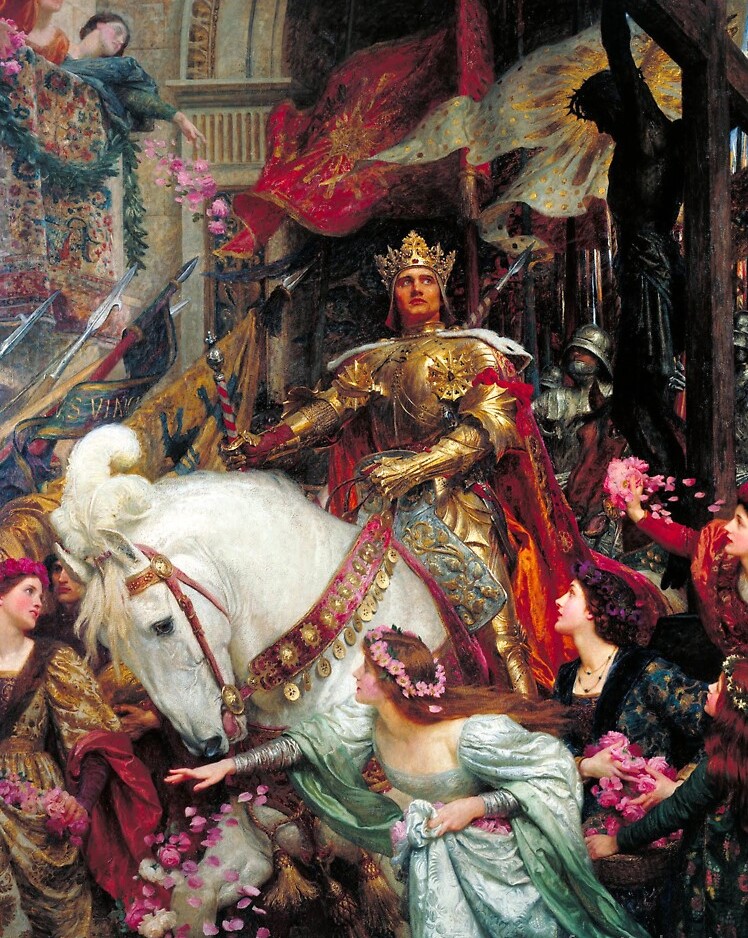
“The Two Crowns” is an oil painting on canvas, created by Sir Francis Bernard (Frank) Dicksee in 1900, and is approximately 2.3m by 1.8m. Currently displayed at the Tate Museum, the painting depicts a medieval scene wherein a prince returns victorious upon his horse, surrounded by revellers. Flags wave in the background, and onlookers gaze up at him in awe, yet the central figure is transfixed by the vision of Christ in the upper-right corner.
This is not Dicksee’s first work with a medieval theme, though it is the only of his historical paintings in which the scene depicted is entirely fictitious, the image itself playing on the idealised image of knighthood, much like that seen in popular fairy-tales and children’s books of the time.
Though, by contrasting the figure of the prince in all his finery with the desolate image of Christ’s crucifixion – an underlying sense of the transience of the prince’s power and glory is brought to light, emphasising the fleetingness of earthly pursuits.
The “Two Crowns” addressed in the piece’s title references both the crown of the prince: a symbol of status, and Christ’s crown of thorns: a symbol of suffering. This draws in to question themes of religion, morality, and worldly desires, evidently felt by the figure of the prince, who appears caught in an intense emotional turmoil, sparked by his vision. The vivid scene of wealth and grandeur appearing somewhat shallow and vain when regarded alongside the vision of Christ.
While the visual nature of the work itself aligned well with Dicksee’s previous works in the Pre-Raphaelite style, it differed from many of his other pieces in that the major focus of the painting was a male figure. Much of Dicksee’s work focuses solely on the female form, though here he deviates from this ideal, depicting the epitome of 19th century masculinity through the figure of the prince: the ‘role model’ as such for a generation of aspiring gentlemen.
Upon its release, the painting was well received, praised for its beauty and technical prowess – hailed by The Times newspaper as “a leading example of an art founded upon an English tradition”. Though, the piece is not without criticism, often being suggested to show underlying Fascist tones in the glorified depiction of the prince, and its strong allusions to supremacy. Critic Joseph A Kestner states in his book: Masculinities in Victorian Painting that the painting idealises “Aryan empowerment, heroic conquest, and male dominance”, a perspective important to take into account when analysing the piece, seeing as the artist himself is rumoured to have expressed Fascist allegiance and tendencies in later life.
Despite its somewhat controversial connotations – the piece ultimately aims to convey the transience of earthly power, wealth, and glory: dazzling the viewer through its crowded, flamboyant scene before drawing us in to the shadowy figure of Christ, cementing the central moral themes of the work. Dicksee’s stark contrast between revelry and suffering producing a solemn contemplation of materialism, and at heart, serving as an allegory on the underlying danger of worldly desire.
 Art History Explained
Leave a comment